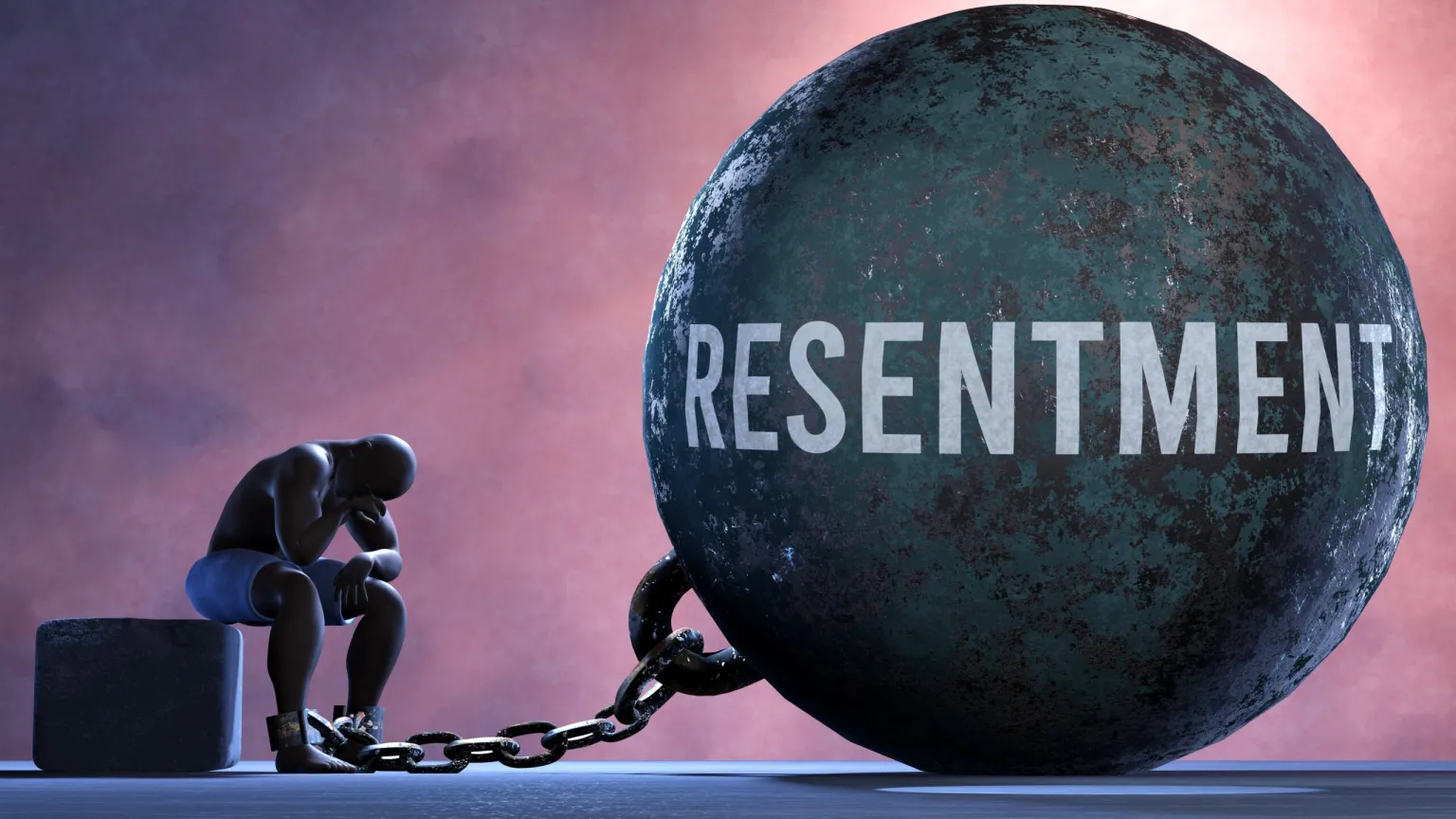
Does resentment help or hinder? Recently, I have explored why so many of us cling to resentment, taking up time and energy in both business and social settings.
There seem to be countless reasons why most are resentful of others, yet I think, when you drill down, those same people are resented by others for completely different reasons.
But why do we hold onto resentment? If resentment hurts us so much, as it seems to, why do we cling to it? Does it feel, on some level, safer than letting go?
Resentment gives a sense of control, or at least the illusion of it. When someone has hurt us, disappointed us, or treated us unfairly, resentment becomes a shield. It says, “I won’t let that happen again.” It becomes a form of self-protection, even though it ends up protecting nothing.
People hold onto resentment because it feels like justice. If we can’t change what happened, resentment becomes the protest sign we never got to hold up. It gives the resentor a story. “I’m like this because they did that.” It’s a way of making sense of pain, even if the story keeps them stuck. Letting go means accepting the hurt, but that can feel too raw, too exposing.
Some people carry resentment for so long that it becomes part of their identity. They don’t even notice the weight anymore.
But here’s the truth: resentment doesn’t protect you. It traps you. It keeps you emotionally tied to the very thing you want to be free from.
Resentment is a quiet poison. It doesn’t explode; it corrodes. It sits there, tucked behind a smile or buried under a busy life, slowly eating away at the person carrying it. And the strange thing is, we often think resentment punishes the person we’re angry with when it punishes us far more.
It’s a lose-lose game. One person must “lose” so the other can “win,” or so the story goes. But resentment doesn’t work like that. Nobody wins. You carry the weight, they carry the distance, and the relationship, whether personal, professional, or even with yourself, becomes a battlefield long after the war ended.
Resentment usually starts small. A comment. A slight. A moment where you felt unseen, unheard, or undervalued. Or a misunderstanding when the facts get twisted or imagined. You tell yourself it doesn’t matter, but your body keeps the score. And before you know it, you’re dragging around emotional luggage that has nothing to do with today and everything to do with yesterday.
The real trap is that resentment convinces you that holding on is a form of strength. In truth, it’s the thing that keeps you weak and stuck.
Letting go isn’t about forgiveness in the fluffy, saintly sense. It’s about reclaiming your energy, your clarity, your autonomy. It’s about refusing to let someone else’s behaviour dictate your emotional climate. It’s about choosing to stop losing.
How Resentment Shows Up in Everyday Life
Resentment doesn’t always announce itself. It rarely storms in with fireworks. Most of the time, it slips quietly into the small moments of daily life, shaping your reactions without you even noticing. It shows up in ways people don’t expect.
Short fuse, long memory. You snap at something tiny, but the reaction belongs to something much older. The present moment becomes a punching bag for a past hurt.
Silent scorekeeping. You start mentally tallying who did what, who didn’t do what, and who “owes” you. Every interaction becomes a quiet audit.
Avoidance disguised as boundaries. You tell yourself you’re “protecting your peace,” but really you’re avoiding a person or situation because the resentment is still alive.
Feeling irritated by someone’s success or happiness. Not because you don’t want them to do well, but because a part of you still feels they didn’t deserve it after what happened.
Resentment rarely looks dramatic.
It looks ordinary.
It looks like everyday life, just heavier.
And the moment you recognise these patterns, you’re already halfway to letting go. Awareness is the first crack in resentment’s armour.
Resentment is a slow poison. It convinces you that you’re righteous while quietly stealing your power. It keeps you replaying old scenes instead of writing new ones. And it tricks you into believing that someone else must change before you can move.
Enough of that.
Choose the harder, braver path:
Take responsibility for what comes next.
Stop feeding the story that keeps you stuck.
Reclaim the energy you’ve been spending on old wounds and invest it in your future.
You don’t have to forgive, forget, or pretend.
But you do have to decide.
Decide to move.
Decide to grow.